Teach a Child to Read
Dedicated to the thousands of children who need to improve
their reading skills, and to their parents who want to help them succeed.
Home
Auditory Skills
Learning to Read
Teaching
Alphabet Sounds
Teaching How to Rhyme
Improving Short Term Memory
Putting Sounds Together
Reading Selections
So we sat in the house all that cold, cold, wet day.
I sat there with Sally. We sat there, we two.
And I said, “How I wish we had something to do!”
– from The Cat in the Hat by Dr. Seuss –
Thirty-eight percent of all fourth graders in the United States can’t read this simple poem. Is your child one of them? Does your child drone, hesitate, and torture words while reading? He or she is one of 7 million elementary-aged children who is performing below his or her reading potential.
Certainly millions of children in America can’t be stupid, lazy, or have ADD. Children sitting in the best classrooms in the country struggle with reading. Moms and dads are scratching their heads wondering whether to get a part-time job to pay for tutoring for Jerome or Ashley.
This past decade, educators have been fighting a Phonics versus Whole Language reading war. Each side has strong advocates, yet many children still emerge from schools unable to read. Meanwhile, scientists have been busy trying to identify the missing puzzle piece of how children learn to read.
Here’s some good news: Research indicates that 90 to 95% of all children can learn to read at grade level with proper intervention. You can make a profound difference in your child’s ability to read by spending fifteen minutes per day with your son or daughter, using the information provided in this website, playing games and reading good books together.
Education and Family Information Websites
- Help Your Child Build Speedy Brain and Reading Skills
- Lesson Plans – Worksheets – Teacher’s Lesson Plans – WebQuests – Primary Teacher Resources – Math Lesson Plans – Writing Lesson Plans – Reading Lesson Plans – Science Lesson Plans – Technology Lesson Plans – Social Studies Lesson Plans
- Sites For Teachers
- Library of Congress
- Resources for Kids and Families
- Home School Top 100 Educational Websites
- Reading, Writing, Math, Science, Crafts, etc.
- Best Websites for Parents
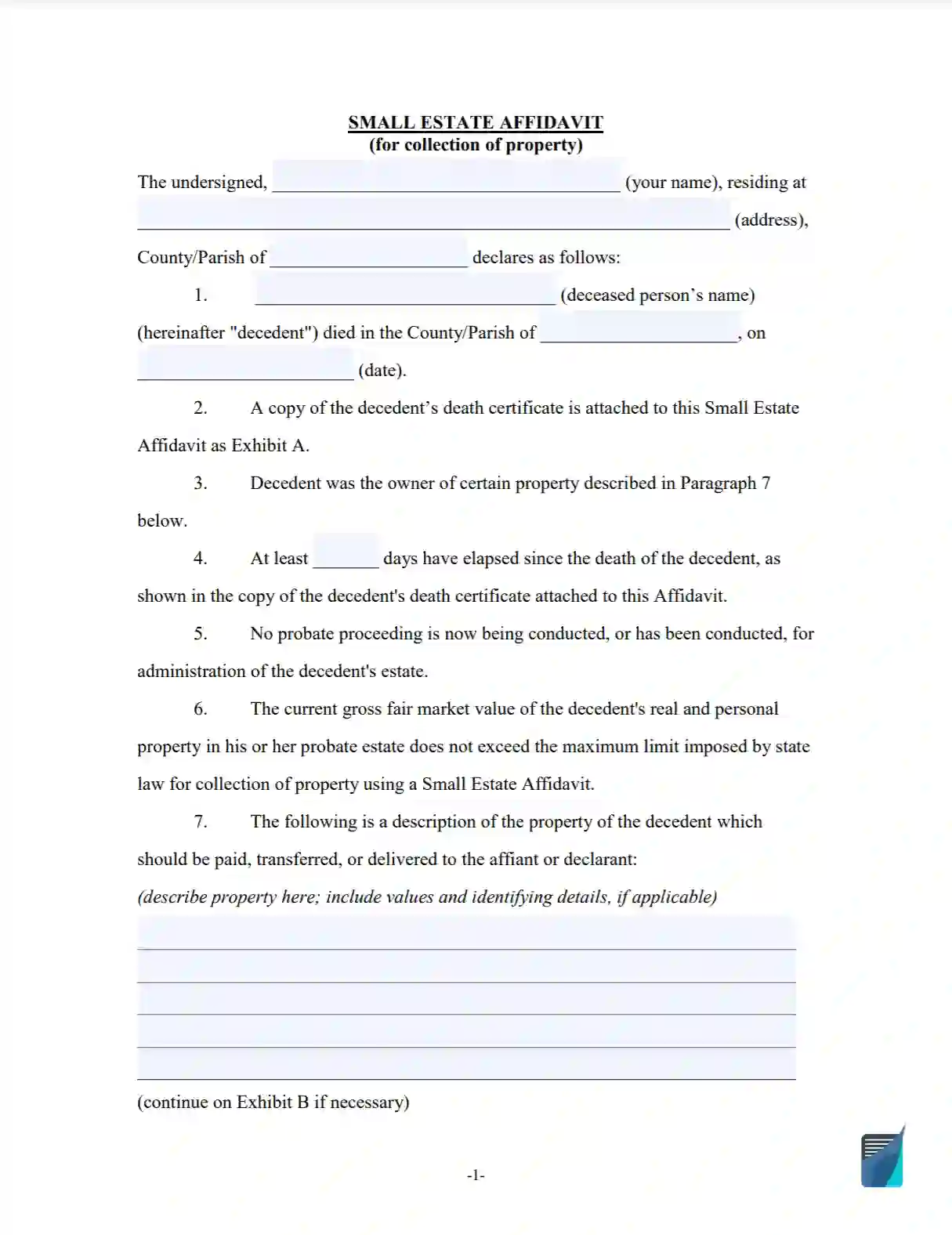
We also provide legal resources that can be helpful for parents and families. Below you will find some of our legal templates related to inheritance distribution and probate process. It will be helpful for family members who have a legal right to inherit the testator’s property and want to speed up the probate process.
Small Estate Affidavit Templates
A Small Estate Affidavit, also known as an affidavit for collection of personal property, is a legal document or form you can use to transfer property from a deceased person without the need for lengthy probate. However, the document may only be used for estates worth less than a specified sum. The sum differs by state and can vary from $5000 to $100,000. A small estate affidavit usually includes the legal heir’s contact information, their link to the decedent, the decedent’s details, a description of the decedent’s property and assets, how it should be distributed, debts, and burial expenditures.
In Illinois, you can use a Small Estate Affidavit Illinois regardless of whether the decedent leaves a will or not. If the will exists, the executor may use a small-estate affidavit to ask the court to distribute the property to people listed in the testator’s will. A beneficiary may use a small estate affidavit to collect the decedent’s personal property from a third party if there is no will. In Illinois, the maximum amount of the estate should be worth $100,000 or less.
Preparing a Small Estate Affidavit California will take some time. First, you need to wait 40 days after the person’s death before filing the affidavit. Secondly, you should provide several attachments to the form, such as a certified copy of the death certificate, evidence proving the property was formerly owned by the decedent, and your identity proof. If there are other legal heirs, you should obtain their signatures on the affidavit. The maximum estate value in California should not exceed $170,000.
A Small Estate Affidavit Texas is used if the decedent dies intestate, that is, without a will. In Texas, you need to wait 30 days before you can take the affidavit to any individual or corporation that owns the property you want to transfer to you. Additionally, your small estate affidavit must be approved by the county’s probate court. The maximum estate value in Texas can reach up to $75,000.
Arizona residents may use a Small Estate Affidavit Arizona to claim their rights to an estate without a will. The document can be filed a minimum of 30 days after the person’s death. The affidavit is used to keep a deceased loved one’s estate out of probate court and avoid legal conflicts over property ownership after they die away. Arizona law provides the maximum value of the estate according to the property type—$75,000 for personal property and $100,000 for real estate.
Small Estate Affidavit Templates by State
Sometimes, you may be confused about how to use a small affidavit form. Every state has its governing laws regarding the waiting periods, maximum estate values, and rules when you are allowed to use the document in general. Depending on the state, you may need to sign a small estate affidavit in the presence of two witnesses or a notary public. In some cases, they are required both. Additionally, not every state allows you to transfer real estate and motor vehicles using a small estate affidavit. That’s why it’s crucial to consult your state requirements and choose the state-specific form. We’ve covered you with respect to the last and prepared the list of small-estate affidavits by state.
- Small Estate Affidavit Alabama
- Small Estate Affidavit Arkansas
- Small Estate Affidavit Colorado
- Small Estate Affidavit Florida
- Small Estate Affidavit GA
- Idaho Small Estate Affidavit
- Small Estate Affidavit Indiana
- Small Estate Affidavit Iowa
- Kansas Small Estate Affidavit
- Louisiana Small Estate Affidavit
- Small Estate Affidavit Maryland
- Small Estate Affidavit Massachusetts
- Small Estate Affidavit Michigan
- Small Estate Affidavit MN
- Mississippi Small Estate Affidavit
- Small Estate Affidavit Missouri
- Small Estate Affidavit Nebraska
- Nevada Small Estate Affidavit
- Small Estate Affidavit NJ
- New Mexico Small Estate Affidavit
- Small Estate Affidavit New York
- Small Estate Affidavit NC
- Small Estate Affidavit Ohio
- Small Estate Affidavit Oklahoma
- Small Estate Affidavit Oregon
- Small Estate Affidavit PA
- Small Estate Affidavit South Carolina
- Small Estate Affidavit Tennessee
- Utah Small Estate Affidavit
- Virginia Small Estate Affidavit
- Small Estate Affidavit Washington
- Small Estate Affidavit Wisconsin
Sample Small Estate Affidavit:
Auditory Skills
Researchers have been looking inside children’s brains while they do literacy tasks. Using functional Magnetic Resonance Imaging (fMRI) they discovered that poor readers showed differences in brain activities than those who are literate. Some important brain areas are underactivating.
A common weakness is in auditory discrimination skills. For example, many poor readers do not “hear” differences in letter sounds. To them, the five short vowels sound almost exactly alike.
This causes poor readers to expend more effort for less return.
They have a harder time rapidly and accurately recalling letter sounds. Inefficient letter-sound recall makes it more difficult for these children blend letter sounds to make syllables or words. Finally, their brains are inefficient in recognizing and recalling words.
But their brains work well in other areas, which explains why they can be bright, yet functionally illiterate. The good news is that children’s brains are not etched in stone. Auditory skills and letter sound memory can be strengthened. Your son or daughter can become a good reader—with your help.
The Tri-Method Instruction to Literacy Success
In a perfect world, children would learn how to read using a combination of three methods of instruction: auditory training, phonics, and whole language.
It’s clear from research that using one of these methods will help only a few children. In fact, using two out of three methods will still leave numerous children illiterate. However, when auditory training, phonics and whole language are merged, literacy rates increase significantly. Hopefully, you will see all three methods reflected in curriculum and used in American classrooms soon.
Literacy Facts
- In 1998, the National Assessment of Educational Progress (NAEP) tested children nationwide for reading skills. The results for reading tests for 4th graders were: below the most basic level—38%; proficient—31%; advanced—7%.
- In 1998 there were ten million children between seven and eleven years of age who performed below the most basic level of reading achievement.
- It is very important to note that a substantial number of children from highly literate households and who have been read to by their parents since very early in life also have difficulties learning to read.
- In 1998, students who reported reading more pages daily in school and for homework had higher average scale scores than students who reported reading fewer pages daily.
- In 1998, students who reported watching three or fewer hours of television each day had higher average reading scores than students who reported watching more television.
- National Institute of Health studies are finding that at least 95% of even the poorest readers can learn to read at grade level if they are given proper instruction in sound-letter relationships.
- Having kids read a lot is one of the crucial components of becoming a good reader. Young readers need to become practiced at recognizing letters and sounds. The only way to get good at it is to practice.
- The average reader spent about 6 minutes per day reading connected text. Children with reading problems spent about one minute per day. The amount of time students spent on worksheets did not relate to gains in reading achievement. What appeared to be most relevant was time spent reading connected print.
- Four year old children who were read one alphabet book per day significantly improved in their awareness of phonemes – tiny letter sounds that make up words.
- Children who struggle in vain with reading in the first grade soon decide that they neither like nor want to read. (Juel, 1998)
Reading Selections
What is a Reading Selection?
A common mistake that adults make is to insist that a child read a whole book. It is far better to help a child reread a short selection to excellence. A short selection is one or two pages from an easy book or one paragraph from a higher level book. If the selection is on the correct readability level for your child, he should make no more than one or two mistakes per twenty words. Any more than that will cause him frustration and will actually block his reading progress.3
Don’t make him read it cold turkey either or he’ll sound like a car starting up on a winter morning – bumpy and hesitant. We don’t want your child to practice bad reading. That’s why you want to do the following:
- Read the short selection to him twice.
- Read the same selection with him twice.
- Finally, ask him to read it by himself twice.
To, With, and By is a fabulous repeated reading technique that will catapult your child forward in reading skills.4 It will help him learn and apply sight words more quickly, helps him to practice fluent reading and improves his comprehension-all the important skills of reading.
Some parents say, “But she’s memorizing the selection!” Well, when was the last time you used phonics to sound out words while reading? Phonics is used as a last resort when bumping into unknown words such as cruciate ligament. When reading you usually recognize words by sight. Phonic skills are necessary to jump-start the process of learning to read. But reading by using sight words is more efficient.